Excedrin Tension Headache
Since 2003 there has been a specialty Excedrin product - Excedrin Tension Headache (also known as Excedrin Aspirin Free). Always popular, people are buying Excedrin for pain in large numbers. But what exactly is this particular product for tension headache (tension-type headache), and will it really help?
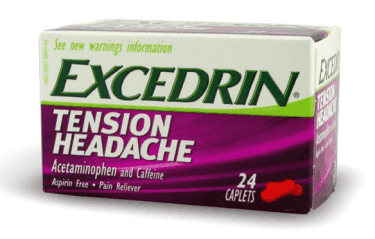
Novartis is the company that now sells Excedrin products. Excedrin is basically a pain reliever, but Novartis has been offering more brands for specific pain symptoms. This includes products such as Excedrin Back & Body, Excedrin Migraine and Excedrin Sinus Headache. The ingredients are targeted to a specific type or level of pain.
Ingredients
Common ingredients in Excedrin are aspirin (acetylsalicylic acid), acetaminophen (paracetamol), and caffeine. Excedrin Tension Headache is a little different because it does not contain aspirin. Each "geltab" (or coated tablet or gelcap) contains 500 mg of acetaminophen (paracetamol) and 65mg of caffeine. That's a little less caffeine than you would find in one cup of coffee, and a little more than in a can of Coke.
As with any painkiller, it also contains a host of "non-medical" ingredients, such as corn starch, magnesium stearate, gelatin, and many more (full list of Excedrin Tension Headache ingredients - see "Labeling Information").
Concerns
Excedrin Tension Headache is generally considered to be one of the safer pain killers. It's being mentioned here because of its popularity, not because it's better or worse than any other similar medications. However, there are a few things to be aware of when taking this Excedrin Tension Headache:
- Temporary - this is a painkiller to take for temporary pain. If you find you're taking it frequently, or for more than 10 days, see your doctor. It was not meant to be put into your body on a regular basis. Besides problems with the ingredients, you may also be in danger of rebound headache.
- As with any medication, you should be cautious about what else you take at the same time. Talk to your doctor before taking alcohol with acetaminophen/paracetamol - it could cause liver damage. Also, be careful not to take other medications that contain acetaminophen/paracetamol at the same time. Too much can cause liver failure.
- Other cautions - if you already have kidney or liver problems, talk to your doctor. Also, take with caution during pregnancy, and when breast feeding. Acetaminophen/paracetamol and caffeine can pass into breast milk.
- Caffeine - there has been increased discussion about the possible dangers of painkillers with caffeine, due to concerns about liver damage (even if you're not taking alcohol too). Most of the research so far involves doses larger than what you would normally take (see Mixing Large Doses Of Common Painkiller And Caffeine May Increase Risk Of Liver Damage from September 2007). However, the interaction is still not fully understood. Be cautious about taking caffeine (coffee, colas, etc) while taking any product containing acetaminophen (paracetamol).
Why caffeine?
Caffeine is commonly used in painkillers because it helps your body to absorb the medicine, and it somehow seems to make certain painkillers more effective. It's not unusual, but you should still use with caution and be aware of other caffeine that you may normally consume.
Once again, this medication is not meant to be taken on a regular basis. If you are experiencing regular pain, you need to see a doctor and find better treatments.
For more information...
For more about this product, check Drugs.com. The official page can be found here.
Read about the related Excedrin product, Excedrin Migraine.